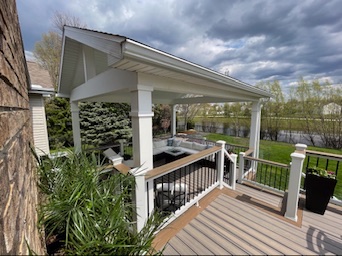
Let’s be honest about wood decks: they’re the cheapest way to get outdoor living space, and sometimes that’s exactly the right call. We build them. But there’s one place we draw a hard line, we don’t install wood railings. Ever. Here’s the honest math on wood decks, and why your railing choice matters more than you think.
The Truth About Wood Decks
What wood gets right
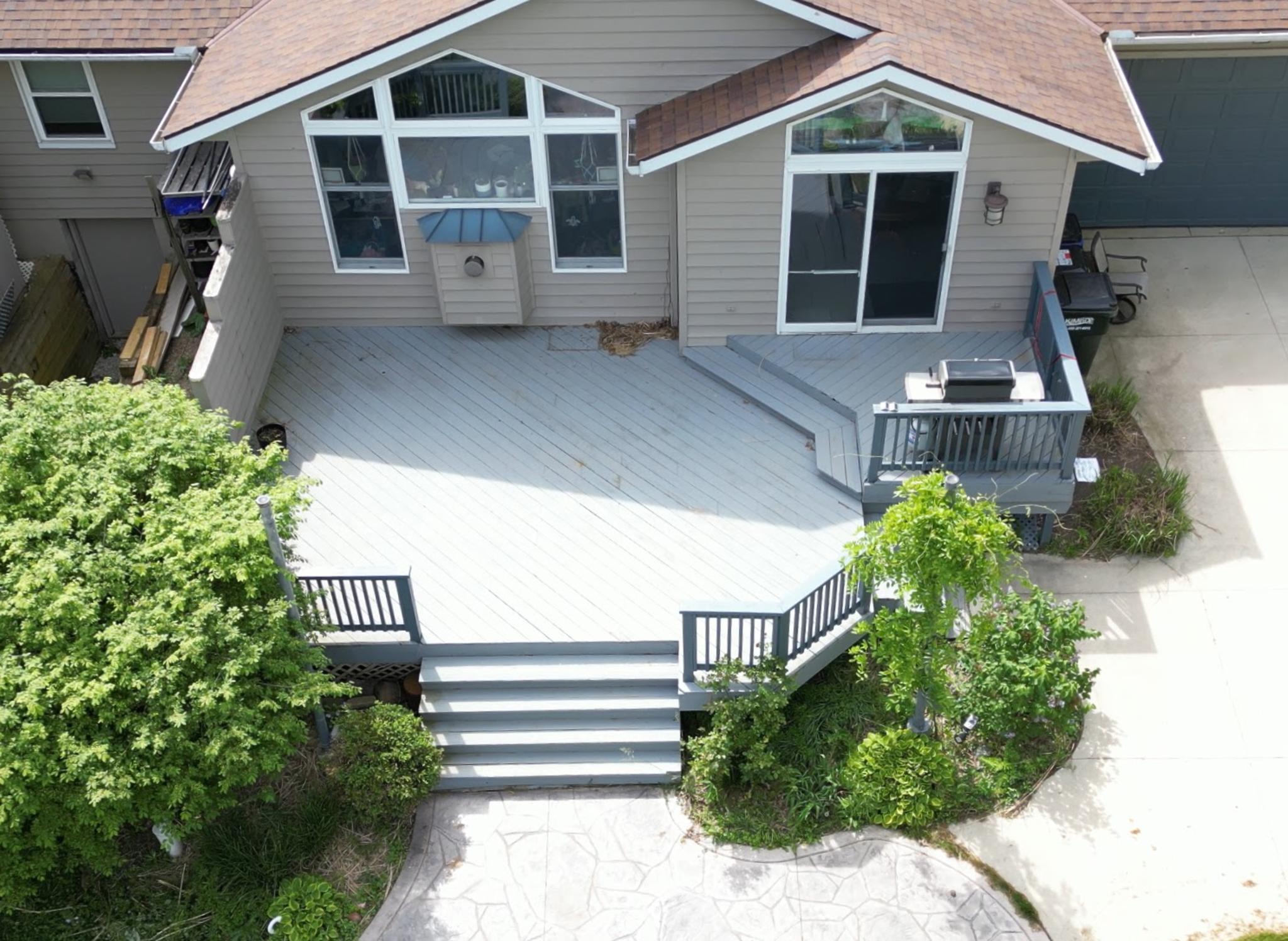
Pressure treated lumber costs a fraction of composite up front, often 30 to 50% less on the total project. If you’re selling the house in a few years, working with a tight budget, or decking a rental, wood can absolutely be the smart spend.
What the brochure doesn’t say
- The maintenance bill never stops: staining or sealing every 2 to 3 years, at hundreds of dollars (or a lost weekend) each time
- Ohio weather is merciless on it: freeze thaw opens cracks, summer sun grays it, and shaded boards grow moss and mildew
- Lifespan is 15 to 25 years vs. 25 to 50 for modern composite, see our deck lifespan guide
- Total cost flips over time: add ten years of upkeep and wood often ends up the more expensive deck, our wood vs. composite comparison runs the numbers
So: wood saves money today and costs time forever. If your budget says wood, we’ll build you a wood deck the right way, engineered frame, helical pier foundation, proper flashing. But the railings won’t be wood, and here’s why.
Why We Never Install Wood Railings
Railings are the part of your deck that hands touch every day and lives depend on. Wood railings are also the first part of any wood deck to fail: they’re built from dozens of small pieces, every joint collects water, balusters loosen, and splinters show up right where kids grab. Rail failures injure more people than deck collapses. A wobbly wood rail isn’t a cosmetic problem, it’s a safety problem.
So on every deck we build, wood or composite, the railing is one of these three:
The Three Railings We Actually Install
1. Composite railing, the coordinated classic
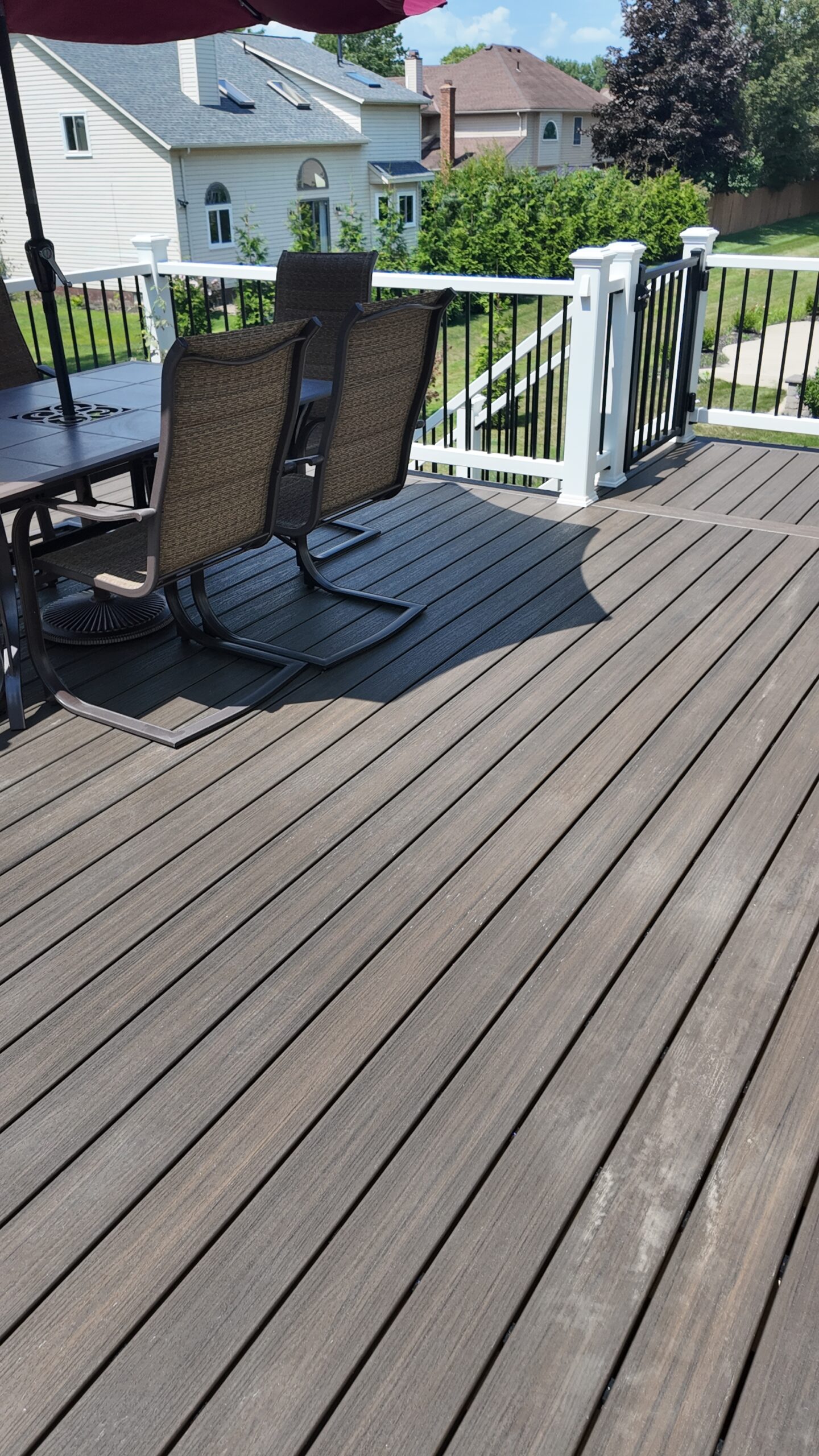
Matches your decking, never needs paint, wipes clean. Chunky, substantial look with hidden fasteners. The go to for traditional homes and Trex/TimberTech builds.
2. Aluminum railing, the workhorse
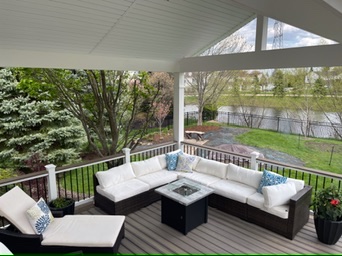
Powder coated, weightless looking, and nearly indestructible. Thin balusters preserve more of your view than composite, and it’s typically the most budget friendly of the three, a perfect upgrade on a wood deck.
3. Cable railing, the view keeper
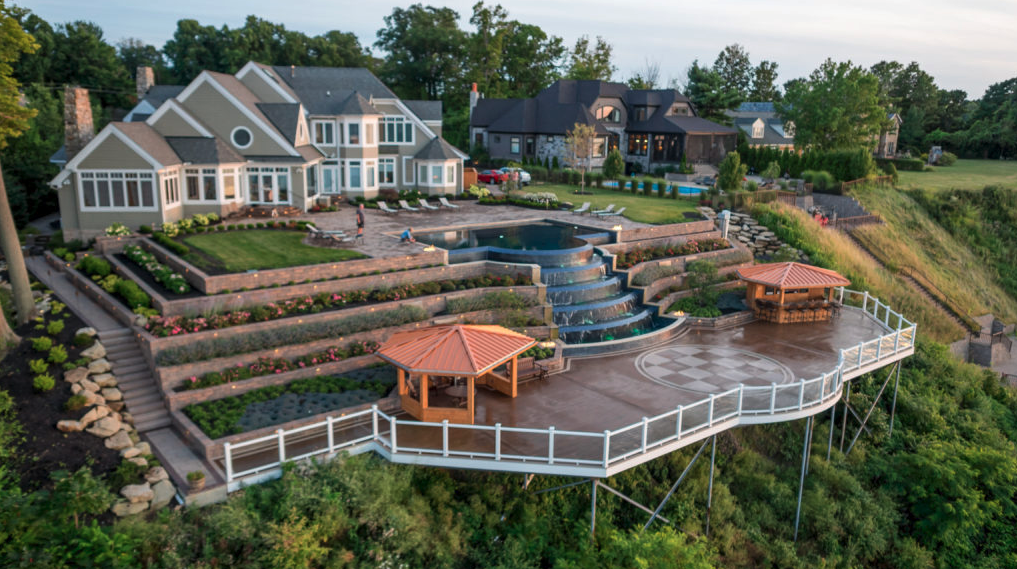
Stainless steel cables pulled taut between posts, nearly invisible from a few feet back. If your deck looks at a lake, a ravine, or a sunset, cable rail is why you built the deck. Pairs beautifully with modern homes, see our high end railing and glass work.
| Composite | Aluminum | Cable | |
|---|---|---|---|
| Look | Traditional, substantial | Clean, classic | Modern, minimal |
| View preservation | Good | Better | Best |
| Maintenance | None | None | Occasional cable tensioning |
| Relative cost | $$ | $ | $$$ |
Wood Budget, Smart Build
Want the honest numbers for your yard, wood vs. composite, with each railing option priced out? That’s exactly what our free design consultation does.
Request a Free Quote