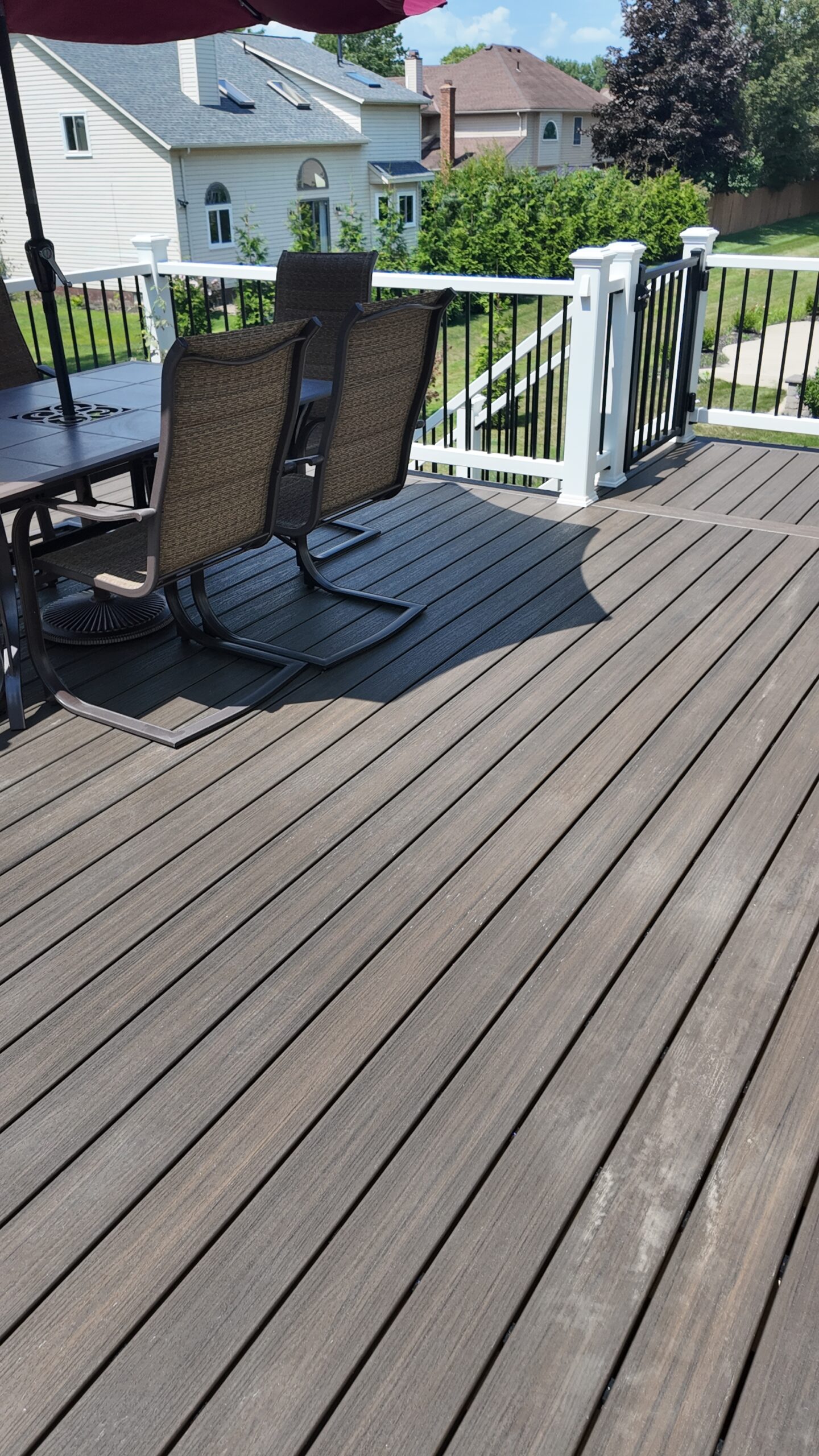
We sell and install composite decking every week, Trex, TimberTech, Deckorators, DuxxBak. We love the stuff. But the marketing brochures don’t tell you everything, and the homeowners who end up unhappy are almost always the ones nobody warned. So here’s the honest list, from a builder who installs it for a living, plus how each problem is avoided.
1. Dark Boards Get Hot in Full Sun
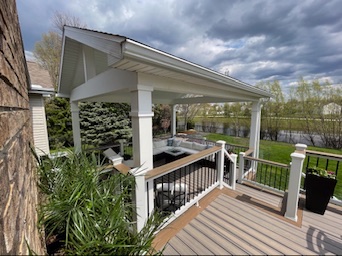
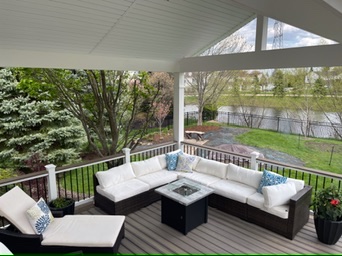
Composite contains plastic, and dark plastic in July sun gets uncomfortable for bare feet, noticeably hotter than wood. The fix: if your deck faces south or west with no shade, choose a lighter color, or design in shade with a pergola. We bring samples and leave them in your sun so you can feel the difference before you commit.
2. Deep Scratches Can’t Be Sanded Out
Wood can be sanded and refinished; a gouged composite board can’t. The fix: premium capped lines (TimberTech AZEK, Trex Transcend) are far more scratch resistant than entry level boards, worth it if you have big dogs or drag furniture. Good news: single boards can be swapped without rebuilding anything.
3. “Maintenance Free” Isn’t Quite True
Composite doesn’t need staining or sealing, that part’s real. But in our humid Ohio summers, shaded decks can grow mildew on the surface film of pollen and dirt. The fix: a soap and water wash once or twice a season. That’s the entire maintenance list, but it isn’t zero. Here’s our full care guide.
4. Boards Move With Temperature
Composite expands and contracts more than wood as temperatures swing, and Northeast Ohio swings 100 degrees between January and July. Installed wrong, that means buckled boards and popped fasteners. The fix: this is an installer problem, not a material problem. Correct gapping and hidden fastening per the manufacturer’s spec eliminates it, and keeps your warranty valid.
5. Cheap Composite Fades and Stains
Bargain uncapped boards from a decade ago gave composite a bad name, they faded chalky and soaked up grease stains. The fix: modern capped boards carry 25 to 50 year fade and stain warranties. Buy the cap, not the bargain bin. See our Trex vs. TimberTech comparison for how the brands stack up.
Want the Honest Version for Your Project?
We’ll tell you which boards we’d put on our own homes, and which ones we won’t install at all. Bring your questions; we like the hard ones.
Request a Free Quote