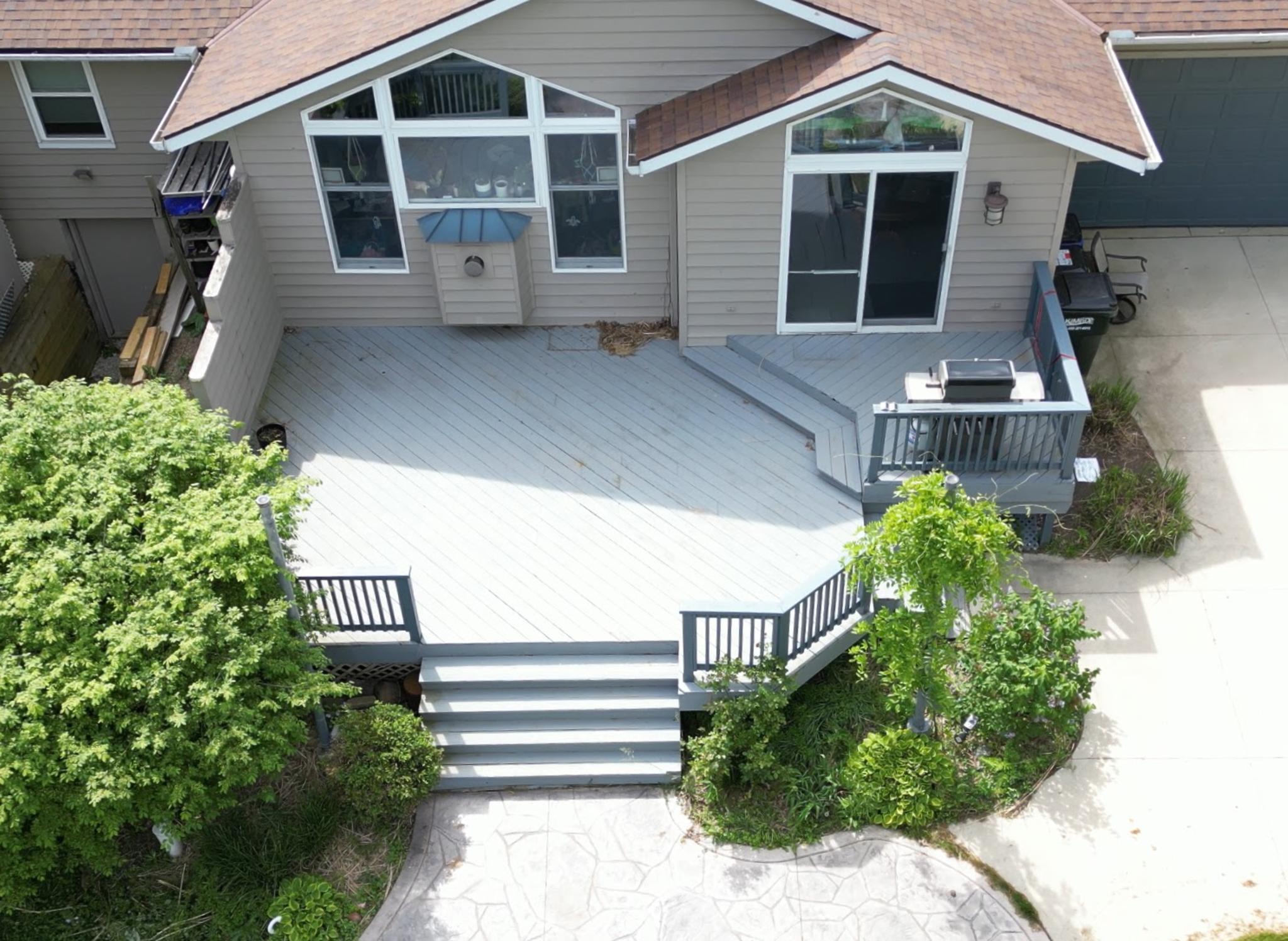
Here’s a statistic worth taking seriously: about 90% of deck collapses involve decks 20 to 30 years old. Thousands of people are hurt every year by failing decks, porches, and balconies — and almost every failure gave warning signs first. If your deck went up in the ’90s or early 2000s, take ten minutes this weekend and check it against this list.
The 10 Warning Signs
1. The ledger board is pulling away from the house
The ledger is the board that ties your deck to your home, and it carries a huge share of the load. If you see a gap, rusted fasteners, or rot where deck meets house, stop using the deck. Ledger failure is the #1 cause of full collapses.
2. Soft or spongy spots underfoot
Wood that gives when you press it is rotting from the inside. One soft board is a repair; soft spots across the deck mean the structure below is likely going too.
3. Wobbly railings
Rail failures actually injure more people than collapses — someone leans, the rail lets go. Grab your railing and shake it hard. Any movement is a fix-now item.
4. Posts rotting at the base
Wood posts sitting in or near soil wick up moisture for decades. Probe the bottom few inches with a screwdriver — if it sinks in easily, the post is failing.
5. Rusted joist hangers and fasteners
Look under the deck. Orange, flaking hardware means the metal holding your frame together is losing strength every season.
6. Cracked or heaved footings
Ohio frost lifts shallow concrete footings and cracks bad pours. A deck that’s out of level often has moving footings underneath — the problem helical piers were designed to solve.
7. Wide cracks in joists or beams
Checking (small surface cracks) is normal in wood. Long, deep cracks that follow the grain through a joist or beam are structural.
8. Missing or wrong hardware
Decks from the nail-only era weren’t built to today’s code. If your deck’s frame is held by nails instead of structural screws, bolts, and hangers, it’s below modern safety standards.
9. Stairs that move
Stair stringers rot at the bottom where they meet the ground or pad. Movement or bounce on the stairs is a top injury source, especially for kids and grandparents.
10. It’s simply past its lifespan
A pressure-treated deck’s expected life is 15–25 years. Past that, even good-looking boards often hide deteriorating structure. Here’s our guide to how long decks really last.
Get a Professional Set of Eyes — Free
Not sure what you’re looking at under there? We inspect aging decks across Cleveland, Akron, and Medina as part of every replacement consultation, and we’ll tell you honestly if your deck has years left in it.
Request a Free Quote